

A short list of questions about childhood can open a much larger conversation about adult health. That is why the ACEs Questionnaire has moved far beyond the landmark research that first made adverse childhood experiences a public-health issue. Today, clinicians, researchers and policymakers are asking a harder question: not simply whether childhood adversity matters, but how it should be measured without reducing a person’s future to a score. New research published in 2025 and 2026 is making that debate more important—and considerably more nuanced.
What Is the ACEs Questionnaire?
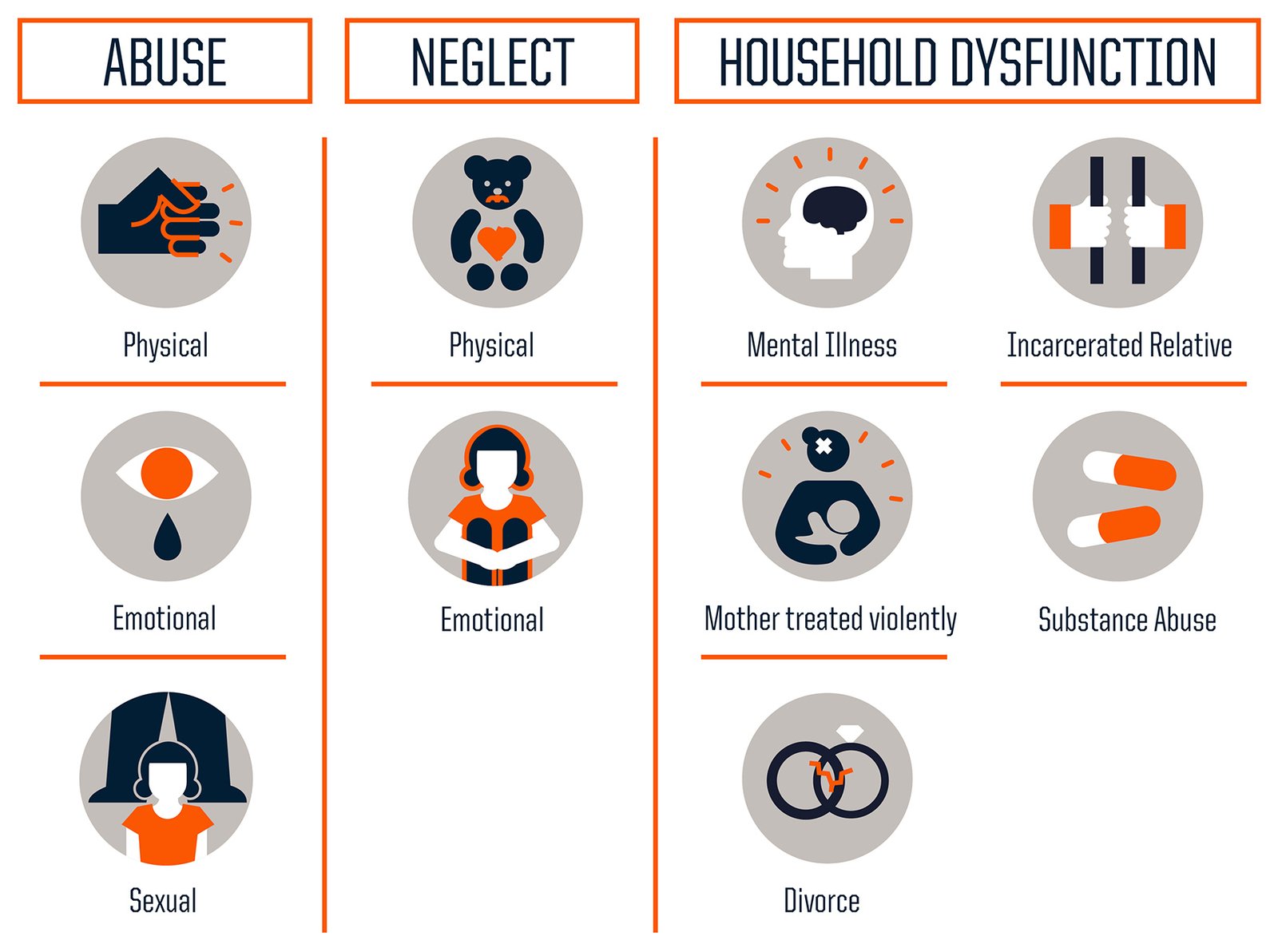
The ACEs Questionnaire is an assessment associated with research on adverse childhood experiences, or ACEs—potentially traumatic or destabilising experiences occurring before age 18. Traditional categories include emotional, physical and sexual abuse; emotional and physical neglect; parental separation or divorce; household substance misuse; household mental illness; domestic violence; and having an incarcerated household member. The questionnaire is intended to identify exposure to adversity rather than diagnose a mental or physical health condition.
A conventional ACE score counts the number of adversity categories a person reports. Someone who reports exposure in three categories would therefore have an ACE score of three. However, that number does not reveal how severe an experience was, how long it lasted, when it occurred, what support the person received, or how the individual responded. Those limitations are increasingly central to the modern discussion about childhood trauma assessment.
How the Original ACE Study Changed Public Health
The story began with the CDC-Kaiser Permanente ACE Study, conducted between 1995 and 1997. More than 17,000 health-plan members in Southern California completed confidential surveys about childhood experiences alongside information about their current health and behaviour. The research revealed a graded relationship: as the number of reported adverse experiences increased, so did the likelihood of numerous negative health and social outcomes later in life.
That finding helped change how researchers considered the connection between early-life environments and lifelong health. The original research was not proof that a particular ACE score would determine one individual’s future. Instead, it showed powerful patterns across populations. Nearly three decades later, that distinction remains critical because associations observed among thousands of people cannot automatically be transformed into precise predictions for a single patient sitting in a consultation room.
Why Adverse Childhood Experiences Still Matter
The scale of childhood adversity helps explain why interest in the ACEs Questionnaire remains high. A CDC analysis of Behavioral Risk Factor Surveillance System data collected from 2011 through 2020 found that 63.9% of U.S. adults reported at least one ACE, while 17.3% reported four or more. The prevalence also differed substantially across demographic groups and jurisdictions, underlining the role of social and economic conditions alongside individual experiences.
More recent youth data reinforces the concern. CDC information updated in 2025 reports that three in four U.S. high-school students surveyed had experienced one or more ACEs and approximately one in five had experienced four or more. The CDC links prevention of childhood adversity with potential reductions in depression, suicidal behaviour, substance-related harms and chronic disease, while stressing the value of safe, stable and nurturing relationships and environments.
What an ACE Score Can—and Cannot—Tell You
An ACE score is best understood as a measure of reported exposure, not a medical diagnosis. At the population level, higher cumulative exposure has repeatedly been associated with increased risk for mental health difficulties, substance misuse, chronic disease and other adverse outcomes. That makes ACE data valuable for epidemiology, prevention planning and understanding how childhood environments can influence health across the life course.
For an individual, however, the same score can describe very different lives. Two people with an ACE score of four may have experienced different events at different developmental stages, with completely different levels of severity, duration, social support and recovery. The score also leaves out many protective factors, including supportive caregivers, strong relationships, community resources, emotional skills and positive childhood experiences that may contribute to resilience.
That is why people should not interpret a high score as a forecast of disease or a low score as proof that childhood stress could not have affected them. The ACEs Questionnaire is a starting point for understanding exposure. It is not a laboratory test, psychiatric diagnosis, personality assessment or prediction of how long or how well someone will live.
Why Experts Are Debating Routine ACE Screening
The most important change in the conversation is a growing distinction between recognising childhood adversity and formally screening everyone with a numerical tool. A 2024 critical appraisal published in Pediatrics concluded that evidence remained insufficient to fully determine the benefits, challenges and potential harms of routine ACE screening in healthcare settings. The authors emphasised that ACE scores generally do not provide information about timing, severity, duration or frequency and should not be treated as individual diagnostic measures.
The American Academy of Pediatrics subsequently stated that it does not support using ACE scores for clinical decision-making and instead recommends trauma-informed care as a universal approach. Such care focuses on safety, trust, respectful communication, relationships and sensitivity to potentially traumatic experiences without assuming that a numerical score can explain a patient’s health. The AAP also highlights positive experiences and protective factors that conventional ACE scoring may miss.
Yet policy is not uniform. New York State, for example, continues to provide Medicaid resources for evidence-based ACE screening and, as of its August 2026 update, lists tools including modified ACE questionnaires, PEARLS and the adult Adverse Childhood Experiences Questionnaire. This contrast illustrates the central policy debate: formal screening is being implemented in some systems even as researchers continue evaluating when, where and how it produces meaningful clinical benefits.
New 2025 and 2026 Research Is Changing the Conversation
Evidence published in 2025 suggested that asking adults about childhood adversity does not automatically produce a negative experience. A primary-care study involving 260 adults in Ontario reported that 81% had at least one ACE and 82% felt comfortable discussing stressful childhood experiences with their healthcare provider. Participants with higher scores were somewhat more likely to report discomfort or feeling upset, which reinforces the importance of sensitive administration and appropriate follow-up.
Reliability research has also advanced. A June 2026 study involving 106 midlife women administered the ACE Questionnaire twice, roughly one year apart. Researchers found substantial agreement between total scores, with a weighted kappa of 0.78, and no significant difference between average scores at the two assessments. The study supports the usefulness of retrospective reporting in research while remaining specific to the population studied rather than proving universal reliability in every setting.
At the same time, researchers are testing broader models. A 2025 systematic review found substantial heterogeneity among validated self-report measures of childhood adversity. Another 2025 study in India evaluated an expanded 14-item assessment incorporating culturally relevant experiences such as financial hardship and parental conflict. Together, these projects reflect a wider movement away from assuming that one fixed list can fully describe adversity across cultures and populations.
Why Protective Factors Are Becoming More Important
Traditional screening is heavily focused on what went wrong. Newer research increasingly asks what went right. Supportive relationships, dependable caregivers, stable environments, community connection and opportunities for healthy development can influence how children respond to adversity. Researchers therefore argue that understanding protective experiences may provide information that a cumulative adversity score alone cannot deliver.
One notable development is the Child and Family Experiences Survey, or CAFES, described in BMC Public Health in 2025. The tool was developed to assess adverse experiences alongside protective childhood experiences and family needs. Its developers said future work would focus on refinement, cross-cultural relevance and appropriate support during implementation. This represents an emerging direction in trauma research: measuring resilience and resources alongside exposure rather than treating adversity as the entire story.
That change matters because resilience is not adequately represented by subtracting points from an ACE total. A person can experience serious childhood adversity while also having a teacher, grandparent, neighbour, coach or other trusted adult who creates stability. Future assessment systems are increasingly likely to consider both risk and protection.
New Evidence Suggests the Traditional Categories May Be Incomplete

Perhaps one of the most interesting 2026 developments comes from research into childhood unpredictability. A Nature Mental Health study analysed data from 29,861 children screened across 19 pediatric primary-care clinics. Researchers examined both conventional ACE exposure using PEARLS and unpredictability in social, emotional and physical environments using a separate five-item measure called QUIC-5.
Both measures were associated with mental health and somatic symptoms, while unpredictability contributed information beyond the traditional ACE screen for several outcomes. The researchers concluded that certain children at elevated risk could be missed when conventional ACE categories are considered alone. The findings do not invalidate existing tools, but they strengthen the argument that childhood adversity is multidimensional and cannot always be captured through ten binary categories.
For researchers, this could push future assessments toward developmental timing, environmental instability, social determinants of health and positive childhood experiences. For patients and families, the practical lesson is simpler: a score should never replace the fuller story of what happened, what is happening now and what supportive resources are available.
Screening Only Matters When Support Follows
A questionnaire can identify adversity, but it cannot provide therapy, secure housing, arrange childcare or create a supportive relationship. That gap between identification and meaningful response has become another major research focus. A January 2026 study interviewed caregivers whose children had been referred to behavioural health following ACE screening and identified barriers including difficulty navigating the healthcare system, appointment availability and concerns about medication.
The same study found that healthcare-system support, family and friends, positive previous experiences with behavioural health and a child or caregiver actively requesting therapy could help facilitate follow-up. In other words, screening works within a system. If that system lacks referral capacity, accessible services or trustworthy communication, identifying adversity may accomplish less than policymakers expect.
A 2026 evaluation of an ACE screening programme for pregnant patients in rural Missouri offers another example. Among 144 patients reviewed, 34.7% had scores of three or more. The programme recorded increased referrals and a statistically significant increase in patients keeping community-health-worker appointments between the periods studied, illustrating how staff education and structured follow-up can influence what happens after screening.
What Patients and Parents Should Know Before Completing the Form
Anyone asked to complete an ACEs Questionnaire should understand why the information is being collected, how it will be used, who can access it and what support is available after disclosure. Trauma-informed practice also means allowing people to maintain choice and dignity around sensitive information. In some settings, aggregated or de-identified versions allow respondents to report the number of experiences without identifying each specific category.
Patients should also remember that the questionnaire does not measure every possible form of adversity. Food insecurity, homelessness, discrimination, community violence, unstable housing and unpredictable environments can matter even when they are absent from a traditional ten-category form. Conversely, an elevated score does not prove that a particular symptom or illness was caused by childhood experiences. Clinical concerns should be evaluated on their own evidence, history and symptoms.
If completing such questions causes significant distress, discussing that reaction with an appropriately qualified healthcare or mental-health professional may be more useful than repeatedly calculating a score online. The goal should be understanding and support, not attaching a permanent label to someone’s past.
Where ACE Assessment Is Heading Next
The next generation of childhood-adversity research is likely to become more personalised without pretending that prediction can ever be perfect. Researchers are increasingly examining developmental timing, chronicity, protective experiences, environmental unpredictability, social determinants of health and cultural differences. Digital health records may also make population-level analysis easier, although privacy, informed consent and appropriate clinical use will remain important concerns.
Another likely shift will be from “What is your score?” toward “What happened, how is it affecting you now, and what strengthens or protects you?” That approach is consistent with trauma-informed relational care and with emerging tools that capture strengths as well as adversity. The ACEs Questionnaire will probably remain influential, but the evidence increasingly suggests that its greatest value may be as one component of a broader conversation rather than a standalone verdict.
Conclusion
The ACEs Questionnaire helped transform the understanding of childhood adversity by showing that experiences early in life can remain relevant decades later. That contribution remains enormously important. However, the research landscape of 2026 is more sophisticated than the original ten-category model. Scientists are investigating resilience, positive childhood experiences, developmental timing, cultural differences and forms of instability that conventional tools may overlook.
For readers, parents and healthcare professionals, the message is not to ignore ACE scores but to place them in context. A number can identify patterns and begin valuable conversations, but it cannot explain an entire childhood or determine a future. Continue exploring the science of adverse childhood experiences, trauma-informed care and protective childhood factors to understand not only how adversity affects health, but also what can help people and families thrive.
Frequently Asked Questions
What does the ACEs Questionnaire measure?
It measures reported exposure to categories of adverse experiences that occurred during childhood.
What is an ACE score?
It is the number of ACE categories a person reports experiencing, usually before age 18.
Is an ACE score of 4 dangerous?
A score of four or more is associated with higher risks in population studies, but it does not predict an individual person’s future.
Can the ACE test diagnose trauma?
No. It identifies reported adversity and is not a medical or psychiatric diagnosis.
Can someone recover from multiple ACEs?
Yes. Outcomes vary widely, and supportive relationships, treatment, resources and protective experiences can promote resilience.
Should everyone take an ACE test?
Not necessarily. Formal screening remains debated, and some professional guidance favours universal trauma-informed care rather than using ACE scores for individual clinical decisions.
You May Also Read: Joao Neves