


A forgotten public-access television host from suburban New York is suddenly part of the conversation again. Clay Tiffany died in 2015, yet his name has returned through true-crime podcasts, legal scholarship, archived video, and renewed interest in former Briarcliff Manor police officer Nicholas Tartaglione. The reason is unsettling: years before Tartaglione was convicted of four murders, Tiffany had publicly accused him of violent misconduct and made those claims part of a relentless local campaign.
This is not a story that fits neatly into hero-and-villain storytelling. Tiffany was abrasive, polarizing, and frequently at odds with local officials. Some of his accusations were disputed, and not every claim he made should be treated as proven. Still, the documented history of his encounters with Tartaglione, the civil litigation that followed, and Tartaglione’s later criminal convictions have given the old story new relevance in 2026.
Why Clay Tiffany Is Back in the Conversation
Renewed attention is visible in the media cycle. In January 2026, True Crimecast released an episode titled “Natural Causes – Clay Tiffany,” revisiting his confrontations with Tartaglione, his public-access show, and the later murder case. In March, the podcast Deep Cuts devoted a 105-minute episode to the same story, describing Tiffany as a “Public Access Prophet.” Those programs do not constitute new evidence, but they show how an obscure Westchester County figure has moved into a wider true-crime and media-history conversation.
The timing also reflects what happened after Tiffany’s death. A federal jury convicted Tartaglione in 2023 on charges connected to the 2016 killings of Martin Luna, Urbano Santiago, Miguel Luna, and Hector Gutierrez. In June 2024, a federal judge sentenced Tartaglione to four consecutive life terms. That outcome inevitably changed how many readers looked back at Tiffany’s warnings about the former officer, even though a later murder conviction does not retroactively prove every earlier allegation.
Who Was Clay Tiffany?
Clay Tiffany was a Briarcliff Manor native who became known around Westchester County as a self-described independent journalist, perennial local candidate, and civic gadfly. UCLA law professor Joanna Schwartz, who once represented him, has described him as a former high-school basketball standout who later spent years investigating practices he considered unfair or unlawful. Municipal records also show him repeatedly appearing at public meetings to challenge village policies, spending decisions, environmental issues, and other local matters.
His style was confrontational rather than polished. He attended board meetings, filed claims and lawsuits, questioned officials, and used television to amplify his grievances. Local coverage after his death described him as both a persistent watchdog and an intimidating presence, reflecting how divided people were about him. He was found dead in Ossining on March 26, 2015. Contemporary reports said he was about 69 or 70 and had died of natural causes.
Public-Access Television Gave Him a Megaphone
Tiffany’s best-known platform was the public-access program “Dirge for the Charlatans.” In an era before livestreams, TikTok, and YouTube commentary channels, public-access cable allowed ordinary residents to put local arguments directly on television. The FCC has documented the growth of public, educational, and governmental access channels from early community cable experiments in the late 1960s, creating a space where unconventional local voices could reach neighbors without a traditional newsroom.
That history matters because the show functioned like a rough analogue predecessor to today’s independent commentary ecosystem. Tiffany used it to criticize politicians, school officials, police, and other institutions. The production values were modest, but the format gave him something powerful: repeat access to a local audience. Public-access channels remain a distinct part of American media law and history, even though the Supreme Court has held that private operators of such channels are not automatically state actors under the First Amendment.
The Conflict With Nicholas Tartaglione
The most consequential chapter began in the late 1990s. Schwartz’s account says Tiffany encountered Briarcliff Manor officer Nicholas Tartaglione during a 1997 traffic stop and then began investigating the officer’s background. She writes that Tartaglione assaulted Tiffany four times over roughly two and a half years, with the final incident leaving Tiffany with a broken orbital bone and several broken ribs. Tiffany then sued Tartaglione and the Village of Briarcliff Manor.
Because Schwartz represented Tiffany, her account is especially important, but readers should still distinguish allegations, litigation records, settlements, and criminal convictions. Tartaglione was not criminally convicted for the alleged assaults on Tiffany. The civil dispute nevertheless became central to Tiffany’s life and later to Schwartz’s academic work. It also created a paper trail that allows today’s readers to examine the episode with more care than a simple retelling of local legend would permit.
What the Lawsuit Revealed About Police Accountability
One of the most significant parts of the story is not the size of the settlement but who paid it. Schwartz says Tartaglione offered $200,000 to settle the claims against him. Tiffany wanted to know whether the money would come from the officer personally or from the government. After the agreement, Schwartz learned that Briarcliff Manor’s insurer had funded the payment, despite the village’s effort during litigation to distance itself from the officer’s conduct.
That question helped shape Schwartz’s later research into police indemnification. In an interview about her work, she said she collected data from 81 law-enforcement jurisdictions and found that officers personally paid only 0.02% of the dollars awarded to plaintiffs during the period she studied. Local news reports have sometimes cited broader Tiffany settlement totals of about $1.1 million, while Schwartz’s firsthand account focuses on the separate $200,000 Tartaglione settlement. That discrepancy is worth preserving rather than flattening into one unsupported figure.
Tartaglione’s Murder Conviction Changed the Story
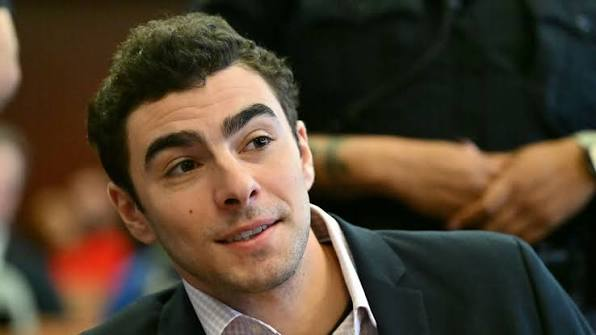
Tiffany could not have known what would happen years after his own encounters with Tartaglione. Federal prosecutors said that in April 2016, Tartaglione orchestrated the kidnapping and murders of Martin Luna, Urbano Santiago, Miguel Luna, and Hector Gutierrez during a cocaine-related dispute. A jury convicted him in April 2023, with the case involving murder, kidnapping resulting in death, kidnapping conspiracy, and narcotics conspiracy counts.
At sentencing in June 2024, U.S. District Judge Kenneth Karas imposed four consecutive life sentences. Prosecutors said Martin Luna was tortured and strangled, while the other three men were shot in the back of the head and all four bodies were buried on Tartaglione’s property. These are established federal convictions, not allegations. They do not validate every statement Tiffany made decades earlier, but they explain why his warnings now appear far more consequential than they did to many contemporaries.
The Jeffrey Epstein Connection and Why It Draws Attention
The story gained another layer because Tartaglione was also housed with Jeffrey Epstein at the Metropolitan Correctional Center in New York in 2019. Justice Department records confirm that Tartaglione and Epstein shared a Special Housing Unit cell for a period that included July 23, 2019. That connection has repeatedly pulled Tartaglione into broader media coverage and internet speculation surrounding Epstein’s incarceration.
Responsible reporting requires a firm line between documented fact and speculation. Official records establish the cellmate relationship and contain allegations Epstein made after a July 2019 incident, but those records do not turn every online theory about Tartaglione into fact. The relevance to Tiffany is indirect: the Epstein connection kept Tartaglione’s name visible, which in turn brought renewed attention to the former officer’s earlier history in Briarcliff Manor and to the resident who had challenged him publicly.
What the Record Supports—and What It Does Not
The strongest version of this story is also the most careful one. Public records support Tiffany’s long involvement in local government meetings. Schwartz provides a firsthand legal account of the civil-rights litigation and the $200,000 settlement. Federal records establish Tartaglione’s later murder convictions and life sentences. Contemporary local reporting documents Tiffany’s death from natural causes and his reputation as a polarizing public-access personality.
What should not be stated as fact is equally important. There is no reliable basis in the material reviewed here to claim Tiffany was murdered, that he predicted a specific future crime, or that every accusation on his television show was correct. Later local reporting itself acknowledged that some of his allegations were inaccurate or disputed. His legacy is compelling precisely because the verified elements are dramatic enough without adding unsupported theories.
Why This Story Matters in 2026
The renewed interest in Clay Tiffany arrives at a moment when local journalism, police accountability, citizen media, and old digital archives are being reexamined by podcast producers and online audiences. His story shows both the strengths and weaknesses of outsider reporting. An independent voice can notice patterns institutions overlook, yet a lack of editorial structure can also produce exaggeration, personal feuds, and claims that audiences struggle to verify.
For readers, the practical lesson is to evaluate evidence in layers. Start with court records and official documents, then use firsthand accounts and reputable journalism to add context. Treat podcasts, documentaries, YouTube archives, and social-media retellings as starting points rather than final authorities. Most importantly, separate the question “Was this person difficult?” from “Was this person sometimes documenting something important?” Those questions can have different answers, and this case illustrates why.
The Future of Tiffany’s Legacy
The renewed 2026 podcast coverage suggests the story may continue moving from local memory into broader true-crime, media-history, and civil-rights discussions. Archived public-access episodes can now circulate far beyond Westchester County, while digitized court documents allow audiences to check claims that once depended largely on newspaper clippings and community recollection. That shift could make the history easier to investigate, but it can also encourage sensational retellings detached from original evidence.
Future documentaries or long-form reporting would have an unusually rich set of themes to explore: public-access television, First Amendment culture, police misconduct allegations, civil litigation, municipal insurance, local politics, and Tartaglione’s later federal prosecution. The strongest future coverage will resist turning Tiffany into a flawless prophet. Instead, it can examine how an unconventional and often abrasive citizen raised questions about an officer whose later criminal history became extraordinarily serious.
Conclusion
Clay Tiffany remains a difficult figure to summarize because his public life combined civic persistence, provocation, litigation, and genuine questions about government accountability. He was neither a conventional journalist nor a neutral observer. Yet the surviving record shows that he focused intensely on Tartaglione years before the former officer committed the murders that ultimately sent him to federal prison for life.
That is why the story continues to resonate. It is about more than one eccentric television host or one disgraced former officer. It raises questions about who gets believed, how local institutions respond to repeated warnings, and how citizens can distinguish uncomfortable truth-telling from unsupported accusation. Readers interested in the case should continue exploring primary court records, archived local reporting, and scholarship on police accountability instead of stopping at the most dramatic retelling.
Frequently Asked Questions
Who was Clay Tiffany?
He was a Westchester County civic gadfly, self-described independent journalist, local political candidate, and host of the public-access television program “Dirge for the Charlatans.” He became especially known for challenging government officials and for his long-running conflict with Briarcliff Manor police officer Nicholas Tartaglione.
What was Dirge for the Charlatans?
“Dirge for the Charlatans” was Tiffany’s public-access television show. He used the program to criticize local government, police, and other institutions. It belonged to the public-access cable tradition that allowed community members to produce programming outside conventional commercial television and traditional newsrooms.
What happened between Tiffany and Nicholas Tartaglione?
According to attorney Joanna Schwartz, Tartaglione assaulted Tiffany several times after Tiffany began investigating and criticizing him. The final encounter allegedly caused serious injuries. Tiffany pursued civil litigation, and Schwartz says a $200,000 settlement concerning Tartaglione was ultimately funded by the village’s insurer.
What happened to Nicholas Tartaglione?
A federal jury convicted Tartaglione in 2023 for his role in the 2016 murders of Martin Luna, Urbano Santiago, Miguel Luna, and Hector Gutierrez. In June 2024, a federal judge sentenced him to four consecutive life terms.
How did Clay Tiffany die?
Contemporary local reporting said Tiffany was found dead at his Ossining home in March 2015 and died of natural causes. He was approximately 69 or 70 years old. Reliable sources reviewed for this article do not establish his death as a homicide.
Why is the story receiving attention again in 2026?
New podcast episodes in January and March 2026 revisited Tiffany’s life, his public-access program, and his conflict with Tartaglione. The renewed interest also follows Tartaglione’s 2023 conviction and 2024 sentencing, which significantly altered the context surrounding Tiffany’s earlier warnings.
You May Also Read: Nunflux