

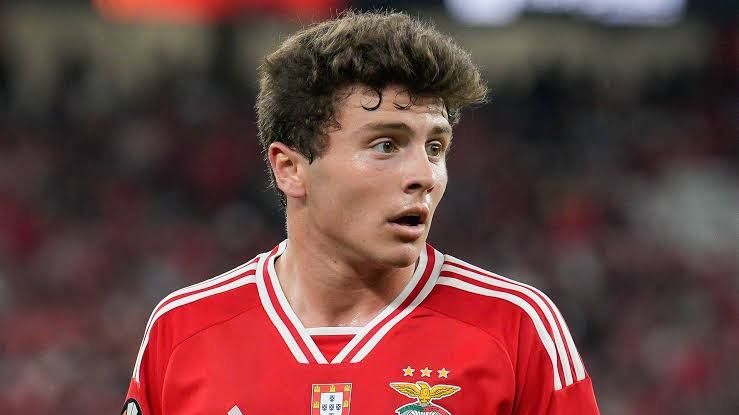
At 21, Joao Neves already owns a résumé many elite midfielders never assemble: two UEFA Champions League titles, domestic championships in Portugal and France, a Nations League triumph, and a World Cup run with Portugal. Yet his most revealing season may still be ahead. Paris Saint-Germain have started 2026-27 under unusual pressure after two Ligue 1 draws, while another punishing Champions League schedule waits. For a midfielder whose influence often appears between the obvious statistics, this is the moment when promise gives way to responsibility.
The story is also about modern midfield evolution. Luis Enrique’s PSG demand players who can receive under pressure, recover possession, rotate positions and move the ball quickly without becoming predictable. Neves fits that model unusually well. His rise from Benfica’s academy to the center of a European champion has taken only a few years, but the next stage will test whether he can become not simply an important young player, but one of the defining midfielders of his generation.
Why Joao Neves Is a Major Story in 2026
The simplest reason is his trophy record. PSG’s official profile credits the Portugal international with playing a major role in the club’s first Champions League triumph and then helping Paris retain the trophy against Arsenal in 2026. He also won the 2025 UEFA Nations League with Portugal. That combination means he has already experienced high-pressure European club and international finals before his 22nd birthday.
However, 2026 has introduced a different kind of pressure. PSG are no longer trying to prove they can conquer Europe; they are defending a period of dominance. Luis Enrique has publicly emphasized competition, squad rotation and the need for players to operate outside their comfort zones. After two Ligue 1 matches this season, Paris had only two points following draws with Rennes and Lille. For established starters, reputation alone will not guarantee minutes.
From Tavira to Benfica’s Famous Academy
Joao Neves was born on September 27, 2004, in Tavira, Portugal. PSG list him at 174 centimeters and 66 kilograms, measurements that make his success particularly interesting in a position historically associated with bigger defensive midfielders. He began playing football in Tavira in 2012 and joined Benfica’s academy in 2016, entering one of Europe’s most productive development systems while still a child.
His Benfica education moved quickly. He won the UEFA Youth League in 2022 and made his first-team debut against Braga on December 30 of that year. During his first senior season, he contributed to Benfica’s Portuguese league championship and made his Champions League debut at only 18. By the following campaign, he had become an established starter rather than a prospect receiving occasional minutes.
Benfica Turned Potential Into an Elite Midfield Profile
The 2023-24 season changed how European clubs viewed him. PSG’s retrospective on his development records 55 appearances across competitions that year, including 33 league matches and 12 European appearances. Those numbers mattered because they showed that the teenager could withstand the rhythm of a demanding season rather than simply produce impressive flashes in limited minutes.
His game also stood apart stylistically. Neves was not built around spectacular long-range passing alone or towering physical power. His appeal came from intensity, positioning, quick decisions, close control and a willingness to contest possession repeatedly. That profile suited a wider shift in elite football toward compact, technically secure midfielders who can participate in pressing and possession rather than remaining fixed as traditional holding players.
The PSG Move Was About More Than Potential
Paris Saint-Germain officially signed the Portuguese midfielder on August 5, 2024. He agreed to a five-year contract and received the No. 87 shirt. At the time, he was only 19, but PSG were not treating him as a long-term development project. Their own announcement emphasized his technical ability, versatility, work rate and rapid emergence at Benfica.
The fit with Luis Enrique was equally significant. Speaking after the move, the midfielder said PSG suited his playing style and praised the club’s emphasis on building around young talent. That philosophy became visible on the pitch. Instead of constructing a side around one superstar, Paris increasingly relied on coordinated movement, pressing and interchangeable technical players. Neves entered a midfield containing Vitinha, Fabián Ruiz and Warren Zaïre-Emery, creating competition but also a structure that rewarded his strengths.
Why His Partnership With Vitinha Works
Vitinha and Neves offer PSG an unusually mobile Portuguese midfield core. Neither depends on overwhelming physical size, yet both understand how to receive in crowded areas and keep possession moving. Vitinha frequently dictates rhythm from deeper positions, while his younger teammate can press forward, support combinations, attack second balls and appear in advanced spaces without abandoning his defensive responsibilities.
That relationship reflects Luis Enrique’s preference for collective control. PSG led the 2025-26 Champions League in possession at 61% and recovered 664 balls, more than any other team in UEFA’s competition statistics. Paris also completed passes at an 89.5% rate, third among participating clubs. Those are team numbers rather than individual statistics, but they illustrate the environment in which an energetic, technically precise midfielder becomes especially valuable.
His Numbers Show an Increasing Attacking Contribution
Joao Neves is often described through pressing and ball retention, but his attacking output has started to expand. FBref’s 2025-26 Ligue 1 data lists him with 21 appearances, 13 starts, 1,287 minutes, five goals and one assist. For a player regularly operating deeper than PSG’s forwards, five league goals represented another step in his development.
In Europe, UEFA’s 2026 Champions League information listed him with 14 appearances and two goals during PSG’s successful title defense. He started the final against Arsenal alongside Vitinha and Fabián Ruiz, and PSG ultimately won 4-3 on penalties after a 1-1 draw in Budapest. The important detail was not simply that he belonged to the squad; Luis Enrique trusted him from the start in the biggest club match of the season.
The Champions League Has Accelerated His Reputation
PSG’s first European title transformed the status of the entire squad, and the club’s second consecutive triumph in 2026 reinforced the idea that Paris had created something sustainable. Neves became part of that transformation almost immediately after leaving Benfica. PSG’s official biography now describes him as a key member of Luis Enrique’s team in both European championship seasons.
His reputation had already grown after his first Paris campaign. UEFA documentation for the 2025 Champions League final noted that Neves was among the PSG players selected in the Ligue 1 Team of the Season. Later that year, he finished third in voting for the men’s Kopa Trophy behind Lamine Yamal and Désiré Doué. Those honors reflected how quickly his work had become visible beyond France.
Portugal Has Given Him Responsibility Early
International football followed a similarly fast timeline. His first senior Portugal call-up arrived in October 2023, only months after he established himself at Benfica. He then appeared at Euro 2024 and became part of a midfield generation that includes Bruno Fernandes, Bernardo Silva and PSG teammate Vitinha.
A major international trophy arrived in June 2025. Portugal defeated Spain 5-3 on penalties after a 2-2 Nations League final in Munich, becoming the first country to win the competition twice. Neves started that final and nearly scored in the opening minutes before being replaced at halftime. Winning with Portugal only days after PSG’s European success completed an extraordinary period in his young career.
The 2026 World Cup Brought Success and Disappointment
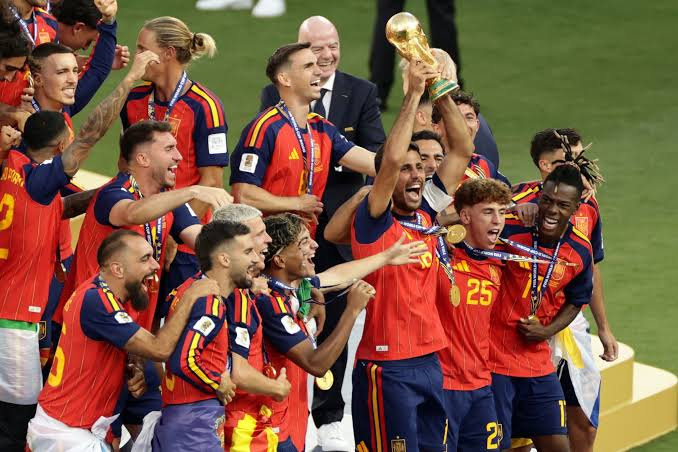
Portugal entered the 2026 World Cup with serious expectations. FIFA’s original squad announcement included Neves alongside fellow PSG players Nuno Mendes, Vitinha and Gonçalo Ramos. Portugal finished second in their group after a draw with DR Congo, a 5-0 victory over Uzbekistan and a scoreless match against Colombia before defeating Croatia 2-1 in the round of 32.
The campaign ended against Spain in the round of 16, when Mikel Merino scored in stoppage time for a 1-0 victory. Reuters noted that Portugal had entered the tournament with a highly regarded midfield featuring Vitinha, Neves and Bruno Fernandes. Match records show the PSG midfielder appearing in all five World Cup matches, starting four, playing 390 minutes and scoring against DR Congo. The elimination also preceded Roberto Martínez’s departure as national-team coach.
What Makes His Playing Style Different
The foundation of his game is speed of thought rather than simply speed over distance. He regularly receives possession knowing where the next pass is likely to go, which helps him escape pressure without needing several touches. That ability becomes particularly valuable against aggressive pressing teams because one quick movement can eliminate an opponent and open a passing lane into a more advanced teammate.
His defensive contribution is similarly proactive. Instead of waiting near his own penalty area, he frequently looks to close passing lanes and challenge opponents closer to where PSG lose possession. UEFA’s 2026 European qualifying statistics with Portugal recorded a passing accuracy of 92.25% across four matches, alongside six tackles and 11 ball recoveries. Those numbers offer a useful snapshot of his balance between circulation and defensive work.
Size Has Not Prevented Him From Competing Physically
At 174 centimeters, he does not have the frame traditionally associated with powerful central midfielders. Yet modern midfield defending involves much more than winning aerial duels. Timing, acceleration, body positioning and anticipation can compensate for height, especially in teams that attempt to recover possession immediately after losing it.
That helps explain why his game translates to Luis Enrique’s system. PSG often need midfielders to defend large areas while remaining technically composed when possession returns. His 66-kilogram frame also contributes to his agility, allowing rapid changes of direction in tight spaces. The challenge is maintaining that intensity across increasingly congested club and international schedules, where physical durability can become as important as technical quality.
The Start of 2026-27 Has Already Tested PSG
The new campaign began unusually. Paris won the UEFA Super Cup against Aston Villa 2-1 on August 12, becoming only the third team to win consecutive editions of that trophy. Neves played 74 minutes in Salzburg, adding another European honor shortly after returning from the World Cup.
He then missed the French Super Cup as PSG chose not to risk him, but L’Équipe reported that he returned to full training and was cleared for the Ligue 1 opener at Rennes. He started that game and played 60 minutes in a 2-2 draw. Paris subsequently drew 2-2 with Lille, leaving the defending champions sixth with two points from two matches. The slow start makes midfield control an immediate issue rather than a distant concern.
PSG’s New Champions League Draw Raises the Stakes
Europe will offer little relief. The 2026-27 Champions League league phase has paired defending champions PSG with Barcelona, Manchester City, Roma, Aston Villa, Galatasaray, Villarreal, Slovan Bratislava and Como. The competition begins in September, while the final is scheduled for June 5 at Atlético Madrid’s Metropolitano Stadium.
For Joao Neves, those matches provide an ideal test of progression. Barcelona and Manchester City specialize in controlling midfield territory, while Roma and Aston Villa can present different tactical challenges. A player becomes recognized as world-class not simply through domestic consistency but by dictating difficult matches against elite opposition. Having already started two Champions League finals with Paris, the next question concerns how much of those games he can increasingly control himself.
Competition Inside PSG Could Make Him Better
Luis Enrique has explicitly warned that squad places must be earned. PSG’s roster includes Vitinha, Fabián Ruiz, Warren Zaïre-Emery, Senny Mayulu and other technical midfield options, while the coach has stressed that the season cannot be navigated with an unchanged starting eleven. The World Cup also shortened the summer recovery period for many Paris players.
That environment can benefit a 21-year-old midfielder. Competition forces players to improve details that rarely make highlight reels: body orientation before receiving, positioning during defensive transitions, when to accelerate possession and when to slow it down. His status has grown rapidly, but PSG’s depth means development cannot stop. For supporters evaluating his season, starts, minutes and responsibilities in major European matches may tell more than raw goals alone.
What His Career Could Look Like From Here
The long-term outlook remains unusually strong. His PSG contract runs through 2029, meaning the club retains control throughout several of the years typically associated with a midfielder’s transition toward his prime. He will turn 22 in September 2026, yet he already has experience in domestic title races, European finals, international tournaments and World Cup knockout football.
The logical next development is greater creative authority. PSG already know he can press, circulate possession and support more advanced players. Becoming more consistently decisive with progressive passing, final-third combinations and goals would broaden his profile further. The Kopa Trophy podium in 2025 showed how highly his generation already rates. If his attacking contribution keeps improving without reducing his defensive intensity, future individual honors become a realistic conversation rather than premature hype.
What Fans Should Watch This Season
First, watch where Luis Enrique positions him. A deeper role places greater responsibility on his passing choices and defensive awareness, while a more advanced assignment allows him to press defenders and arrive near the penalty area. PSG’s fluid structure means those responsibilities can change within the same match, making positional interpretation more informative than simply labeling him a defensive or central midfielder.
Second, monitor his availability after a compressed calendar containing the Champions League final, World Cup and early European Super Cup. Luis Enrique has already emphasized rotation after the summer tournament. Finally, judge his biggest performances against Barcelona, Manchester City and other Champions League opponents. Those contests will show whether the young Portuguese midfielder is merely participating in PSG’s dominant era or beginning to direct it.
Key Takeaways
Joao Neves has progressed from Benfica academy graduate to two-time Champions League winner in less than four years of senior football. He joined PSG in August 2024 on a five-year contract after winning the Portuguese league with Benfica, then quickly became part of Luis Enrique’s core midfield. He has also won the Nations League with Portugal and represented his country throughout the 2026 World Cup.
His value cannot be measured only by goals or assists. Passing security, pressing intensity, positioning and the ability to operate in several midfield roles are central to his importance. The challenge for 2026-27 is to convert those qualities into greater authority while PSG defend domestic and European titles. With Barcelona and Manchester City among the opponents ahead, the season should provide an unusually clear measure of his next level.
Conclusion
Joao Neves is no longer simply one of Europe’s most interesting young midfielders. At 21, he has already started a Champions League final for a team that successfully defended the trophy, played significant World Cup minutes for Portugal and collected major honors across club and international football. What separates his story from many young-player narratives is that development has happened inside teams expected to win immediately.
The coming months will reveal whether that rapid rise can become sustained elite influence. PSG’s slow domestic start, Luis Enrique’s competitive squad policy and another difficult Champions League campaign create exactly the environment in which reputations can grow—or stall. Follow his positioning, passing influence, defensive work and performances in Europe’s biggest matches. Those details will show whether Paris are watching an excellent young midfielder mature or the emergence of a player capable of defining the position for years.
Frequently Asked Questions
How old is Joao Neves?
He is 21 and turns 22 on September 27, 2026.
What club does Joao Neves play for?
He plays for Paris Saint-Germain in Ligue 1.
What number does Joao Neves wear?
He wears PSG’s No. 87 shirt.
When did Joao Neves join PSG?
He joined Paris Saint-Germain on August 5, 2024.
When does his PSG contract expire?
His current contract runs until 2029.
Has Joao Neves won the Champions League?
Yes. He has won it twice with PSG, in 2025 and 2026.
Did Joao Neves play at the 2026 World Cup?
Yes. He appeared in all five of Portugal’s matches and scored once.
You May Also Read: Gabriel Magalhães