

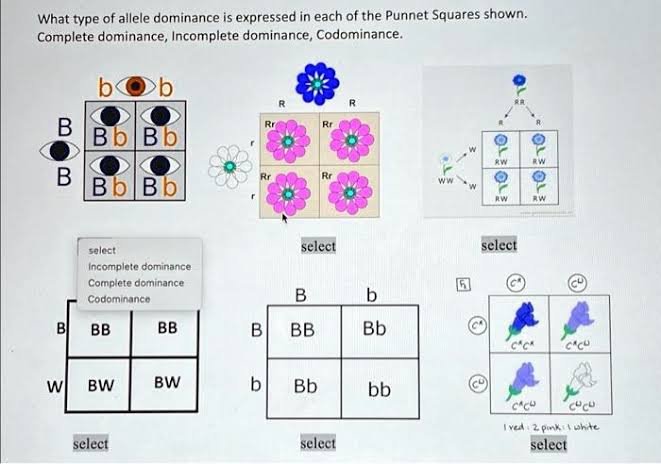
Incomplete dominance vs codominance describes two important inheritance patterns that differ from simple Mendelian dominance. In both cases, a heterozygous organism carries two different alleles, yet neither follows the familiar pattern in which one allele completely hides the other. The key difference is phenotype: incomplete dominance produces an intermediate appearance, while codominance allows both inherited traits to appear distinctly in the same individual.
These inheritance patterns help explain why offspring do not always look exactly like one parent or display a simple dominant trait. Learning incomplete dominance vs codominance also strengthens understanding of alleles, genotypes, phenotypes, heterozygous inheritance, and Punnett squares. Classic examples such as pink snapdragons, roan cattle, and human AB blood type make the concepts easier to recognize and apply in genetics problems.
What Is Incomplete Dominance?
Incomplete dominance occurs when neither allele completely dominates the other in a heterozygous individual. Instead of showing only one parental trait, the offspring develops an intermediate phenotype between the two homozygous forms. A classic example involves flower color. When a red-flowered snapdragon is crossed with a white-flowered snapdragon, heterozygous offspring may produce pink flowers, creating an appearance between the two parental phenotypes.
It is important to understand that the alleles themselves do not physically merge or disappear. The organism still inherits one allele from each parent, and both remain part of its genotype. The intermediate appearance results from how those alleles influence the phenotype. This distinction helps students avoid the common misconception that incomplete dominance permanently blends genetic information in the same way paint colors might physically mix together.
What Is Codominance?
Codominance occurs when two different alleles are both fully expressed in a heterozygous organism. Neither allele masks the other, and neither produces an intermediate version of the trait. Instead, characteristics associated with both alleles can be detected at the same time. This pattern creates one of the clearest differences when studying incomplete dominance vs codominance because both inherited contributions remain separately recognizable.
Human AB blood type is a widely used codominance example. A person who inherits an A allele from one parent and a B allele from another can express both A and B antigens on red blood cells. Roan cattle offer another example because individual animals can display both red and white hairs. The colors remain separately visible rather than becoming one intermediate hair color.
Incomplete Dominance vs Codominance: Key Differences
The central difference in incomplete dominance vs codominance is the phenotype of the heterozygote. With incomplete dominance, the phenotype falls between the two parental forms. Red and white flowers producing pink offspring demonstrate this intermediate effect. With codominance, both parental traits are expressed together. Red and white hairs appearing simultaneously in roan cattle demonstrate how neither trait is hidden or transformed into an intermediate version.
Both inheritance patterns differ from complete dominance because neither involves one allele entirely masking the other. However, their outcomes are not the same. Incomplete dominance produces an intermediate phenotype, whereas codominance displays both expressions clearly. A useful memory technique is to associate incomplete dominance with “in between” and codominance with “coexisting,” meaning both allele-associated traits are expressed within the same heterozygous individual.
Examples of Incomplete Dominance
Snapdragon flower color is one of the most familiar examples of incomplete dominance. A red-flowered plant carrying one homozygous genotype can be crossed with a white-flowered plant carrying another. Their heterozygous offspring can develop pink flowers. The pink phenotype is neither completely red nor completely white, making it an effective example for demonstrating how partial expression can create an intermediate observable characteristic.
Other plant traits can also be used to explain incomplete dominance, especially when heterozygous offspring display an appearance between two homozygous parents. However, appearance alone should not be considered enough to prove the inheritance pattern. Genetic analysis is necessary because some traits that appear intermediate may be influenced by multiple genes or environmental conditions rather than a single incomplete-dominance relationship between two alleles.
Examples of Codominance
Human AB blood type provides an especially useful example of codominance because both A and B alleles contribute detectable products. Someone with the IAIB genotype expresses both A and B antigens rather than producing an intermediate antigen. This simultaneous expression clearly demonstrates how codominance works and helps separate the concept from incomplete dominance, where an intermediate phenotype would be expected instead.
Roan cattle provide another memorable illustration. A roan animal can have both red hairs and white hairs distributed across its coat. The individual hairs do not become an intermediate pink color. Instead, both parental color characteristics remain visible. This makes roan cattle particularly helpful when learning incomplete dominance vs codominance because students can directly visualize the difference between intermediate expression and simultaneous distinct expression.
Punnett Squares for Incomplete Dominance
Punnett squares are useful for predicting the possible offspring produced by incomplete-dominance crosses. Consider two heterozygous pink snapdragons. Each parent can contribute either allele to its offspring. When the possible combinations are arranged in a Punnett square, the expected genotypes commonly appear in a 1:2:1 ratio: one homozygous red, two heterozygous pink, and one homozygous white offspring.
The phenotypic ratio in this simple cross is also 1:2:1 because the heterozygous genotype produces its own recognizable phenotype. This differs from the classic 3:1 phenotype ratio often associated with complete dominance. Understanding this pattern makes incomplete dominance vs codominance problems easier because students can connect allele combinations with visible results instead of relying entirely on memorized definitions or dominance symbols.
Punnett Squares for Codominance
Codominant inheritance can also be predicted with Punnett squares. The process remains similar: identify the alleles carried by each parent, place them along the sides of the square, and calculate possible offspring combinations. In the ABO blood group system, specific allele notation helps show how IA and IB may occur together. When both are inherited, the offspring displays the AB blood phenotype.
Some codominant crosses can also produce a 1:2:1 phenotypic ratio, which means ratios alone cannot always distinguish incomplete dominance vs codominance. The most important clue is how the heterozygous phenotype appears. If both allele-associated traits remain separately expressed, the pattern is codominant. If the heterozygote appears intermediate between the two homozygous phenotypes, the pattern represents incomplete dominance.
Complete Dominance vs Incomplete Dominance vs Codominance
Complete dominance occurs when one allele determines the phenotype of a heterozygous individual while the effect of the other allele is masked. In a simple Mendelian example, an organism with one dominant and one recessive allele displays the dominant phenotype. This differs from incomplete dominance, where the heterozygote appears intermediate, and codominance, where both allele-associated characteristics are expressed at the same time.
Comparing all three patterns provides a clearer genetics framework. Complete dominance produces one dominant-looking phenotype in the heterozygote. Incomplete dominance produces an intermediate phenotype. Codominance produces simultaneous expression of both traits. This comparison is valuable because students often understand incomplete dominance vs codominance more quickly when both are placed beside the familiar dominant-recessive inheritance pattern taught in introductory genetics.
Incomplete Dominance vs Codominance in Humans
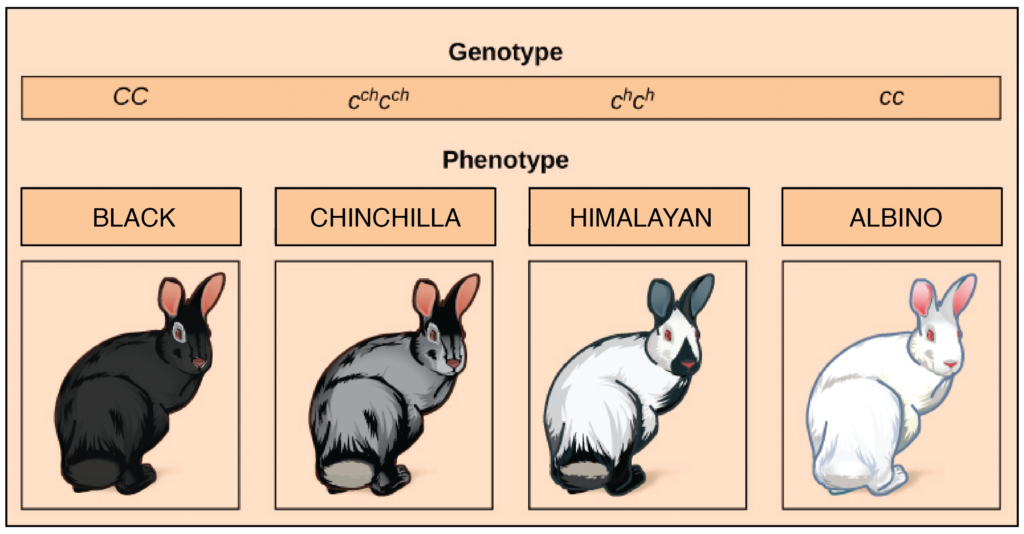
Codominance has a well-established human example in the ABO blood group system. The IA and IB alleles are codominant, so individuals who inherit both can have type AB blood. Both antigens are expressed on red blood cells, making this a clear example of two allele products appearing simultaneously rather than one masking the other or producing an intermediate version.
Human examples of incomplete dominance require more caution because many visible characteristics are influenced by multiple genes, environmental conditions, and complex biological interactions. Traits such as height, skin pigmentation, and eye color should not automatically be described using a simple incomplete-dominance model. When discussing incomplete dominance vs codominance in humans, well-supported genetic mechanisms should be distinguished from simplified classroom examples that may overlook polygenic inheritance.
Genotype and Phenotype in These Inheritance Patterns
Genotype refers to the specific alleles an organism carries, while phenotype describes the observable or measurable characteristic produced by genetic expression and environmental influence. These terms are essential for understanding incomplete dominance vs codominance because the main distinction between the patterns becomes visible in the phenotype of a heterozygous organism rather than simply in the presence of two different alleles.
In both incomplete dominance and codominance, a heterozygote carries two different alleles. What changes is how those alleles affect expression. In incomplete dominance, the heterozygous phenotype is intermediate. In codominance, both allele products are expressed. Keeping genotype and phenotype separate allows students to understand that alleles remain genetically distinct even when the resulting phenotype looks intermediate or displays both traits simultaneously.
Why These Patterns Are Non-Mendelian Inheritance
Incomplete dominance and codominance are often grouped under non-Mendelian inheritance because they do not follow the simplest dominant-recessive relationship commonly associated with Mendel’s pea plant experiments. Mendelian principles regarding allele segregation still remain important, but phenotypic expression can be more complex. One allele does not always completely dominate another, creating inheritance outcomes beyond the basic dominant-versus-recessive model.
Studying these patterns shows that genetics is more diverse than simple textbook dominance may suggest. Multiple alleles, polygenic inheritance, sex-linked inheritance, epistasis, and environmental influences can further complicate how traits develop. Learning incomplete dominance vs codominance therefore provides an important bridge between introductory Mendelian genetics and the more complex mechanisms scientists use to understand real biological inheritance and variation.
How to Remember Incomplete Dominance vs Codominance
A simple way to remember incomplete dominance is to think “intermediate.” When neither allele completely dominates, the heterozygous phenotype appears between the two parental phenotypes. Red and white snapdragon flowers producing pink offspring provide an easy visual reminder. The phenotype looks intermediate, even though the underlying alleles remain separate and are still inherited normally by later generations.
For codominance, think “coexistence.” Both allele-associated traits are expressed together without being hidden or converted into a single intermediate form. Type AB blood and roan cattle illustrate this idea clearly. When comparing incomplete dominance vs codominance on a test, ask one question: does the heterozygote show an intermediate phenotype, or can both traits be independently identified? That distinction usually reveals the correct answer.
Why Incomplete Dominance and Codominance Matter
These inheritance patterns matter because they show how different allele interactions create biological variation. They help explain why heterozygous organisms may display outcomes that cannot be predicted by simple complete dominance. Understanding such patterns allows students to interpret genetic crosses more accurately and prepares them for advanced topics involving gene interactions, allele expression, molecular genetics, and population-level inheritance.
Incomplete dominance vs codominance is also important because these concepts appear throughout biology education, genetics exercises, Punnett-square problems, and studies of blood groups and inherited characteristics. Recognizing the difference builds stronger reasoning skills. Instead of memorizing isolated examples, students can examine phenotype expression, identify allele relationships, predict offspring, and determine which inheritance mechanism best explains a particular genetic outcome.
Conclusion
Incomplete dominance vs codominance differs mainly in how heterozygous alleles influence phenotype. In incomplete dominance, neither allele completely dominates, creating an intermediate phenotype such as pink snapdragon flowers. In codominance, both alleles are fully expressed, as demonstrated by AB blood type and the distinct red and white hairs of roan cattle. Both patterns expand our understanding beyond simple Mendelian dominance.
Punnett squares make these inheritance patterns easier to analyze by showing possible genotype and phenotype combinations. The simplest memory rule is straightforward: incomplete dominance means an intermediate phenotype, while codominance means both characteristics are expressed together. Understanding this distinction provides a strong foundation for studying non-Mendelian inheritance, allele interactions, genetic variation, and more advanced biological concepts involving the relationship between genotype and phenotype.
FAQs
What is incomplete dominance vs codominance?
Incomplete dominance creates an intermediate phenotype, while codominance expresses both traits.
What is an incomplete dominance example?
Pink snapdragons produced from red and white flower parents are a classic example.
What is a codominance example?
AB blood type and roan cattle are common examples.
Is AB blood type codominance?
Yes. Both A and B antigens are expressed in type AB blood.
Does incomplete dominance blend genes?
No. The alleles remain separate even though the phenotype appears intermediate.
Can both patterns have a 1:2:1 ratio?
Yes. Some simple crosses in both patterns can produce a 1:2:1 ratio.
You May Also Read: Compact Bone Function