

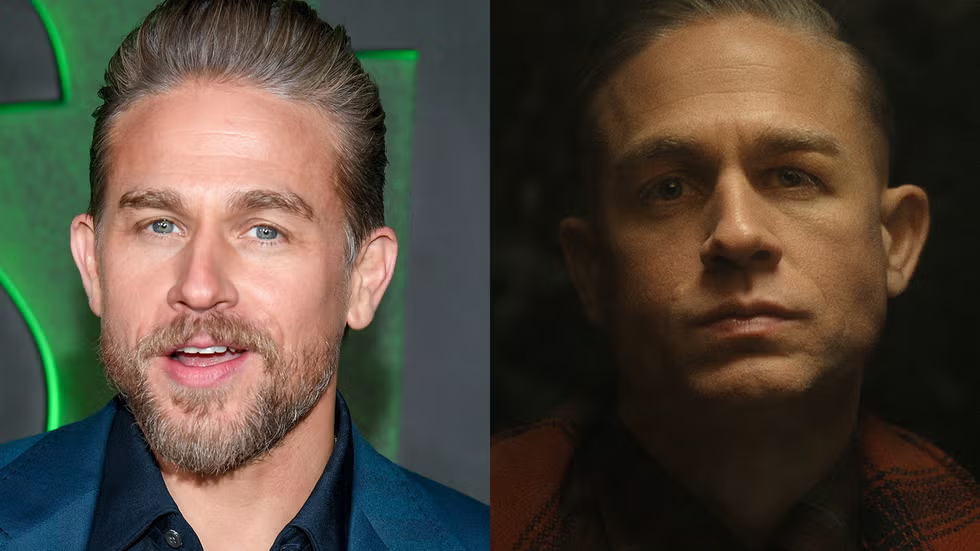
More than seven decades after police entered a farmhouse in rural Wisconsin and uncovered one of America’s most notorious criminal cases, Ed Gein is again part of the cultural conversation. This time, the attention comes from Netflix. Monster: The Ed Gein Story, starring Charlie Hunnam, arrived in October 2025 and quickly became a global hit. Now, in 2026, seven Emmy nominations have renewed interest in the series—and reopened questions about what really happened, what Netflix changed, and why Gein’s disturbing legacy still shapes modern horror.
What Is the Ed Gein Netflix Series?
The Ed Gein Netflix project is officially titled Monster: The Ed Gein Story. It is the third installment of Netflix’s true-crime anthology created by Ryan Murphy and Ian Brennan, following DAHMER — Monster: The Jeffrey Dahmer Story and Monsters: The Lyle and Erik Menendez Story. All eight episodes premiered globally on October 3, 2025. Netflix classifies the series as a TV-MA drama and describes it as a dramatized examination of Gein’s crimes and his enormous influence on horror filmmaking.
Charlie Hunnam plays Edward Theodore Gein, while Laurie Metcalf portrays his mother, Augusta Gein. Suzanna Son appears as Adeline Watkins, and the wider cast includes Tom Hollander as Alfred Hitchcock, Olivia Williams as Alma Reville, Joey Pollari as Anthony Perkins, Vicky Krieps as Ilse Koch, Will Brill as filmmaker Tobe Hooper, Lesley Manville as Bernice Worden and Addison Rae as Evelyn. By placing real Hollywood figures alongside Gein’s story, the series attempts something broader than a conventional crime reconstruction: it traces how a Wisconsin murder case became embedded in popular culture.
Why Ed Gein Netflix Is Trending Again in 2026
The programme is nearly a year old, but it has gained a fresh news cycle because of the 78th Primetime Emmy Awards. The Television Academy lists seven 2026 nominations for Monster: The Ed Gein Story, covering acting and technical categories. Charlie Hunnam received a nomination for Outstanding Lead Actor in a Limited or Anthology Series or Movie, while Laurie Metcalf was nominated for Outstanding Supporting Actress.
The series also earned nominations for cinematography, period costumes, prosthetic makeup, non-prosthetic period makeup and sound mixing. Hunnam’s nomination is particularly notable because the Television Academy identifies him among 2026’s first-time acting nominees. With the awards season placing the drama back in entertainment headlines, search interest around Ed Gein Netflix now extends beyond viewers discovering an older release; it includes people revisiting the performances, factual accuracy and ethical debate surrounding the production.
There is another timely reason the Monster franchise is receiving attention. Netflix has confirmed that its next installment will focus on Lizzie Borden and is scheduled to arrive on September 17, 2026. Netflix’s own overview of the upcoming season specifically points back to the Gein installment and its seven Emmy nominations, showing how the anthology is increasingly functioning as an interconnected true-crime brand rather than a collection of isolated releases.
How Big Was Monster: The Ed Gein Story on Netflix?
The launch numbers show that curiosity translated into substantial viewing. Netflix reported that the programme recorded 12.2 million views during its first three days of availability, entering the English-language television chart at No. 2. That opening was followed by an even stronger second week, when the series climbed to No. 1 with 20.7 million views.
The momentum continued. During the week beginning October 13, 2025, Monster: The Ed Gein Story remained No. 1 on Netflix’s English TV chart with another 9.5 million views. By Halloween week it was still present in the Top 10, ranking sixth with 2.8 million views. Netflix later said the show reached No. 1 in 11 countries, demonstrating how a criminal case rooted in small-town 1950s Wisconsin could become global streaming entertainment nearly 70 years later.
Those figures also help explain Netflix’s continuing commitment to the Monster format. Its first season about Jeffrey Dahmer surpassed one billion viewing hours within its first 60 days, according to Netflix. The Menendez installment later received 11 Emmy nominations, and the Gein season has now secured seven. Whatever critics think of the franchise’s approach, audience demand for prestige-style true-crime dramatization remains commercially significant.
Who Was the Real Ed Gein?
To understand the drama, it is important to separate the historical individual from the mythology that developed around him. Ed Gein was born in Wisconsin in 1906 and lived much of his life near Plainfield. After the deaths of his close family members, he remained on the family farm. Authorities arrested him in November 1957 after the disappearance of 58-year-old hardware-store owner Bernice Worden led investigators to his property.
The investigation revealed evidence of extensive grave robbing and the use of human remains to create household objects and clothing. Gein admitted killing Worden and tavern owner Mary Hogan, who disappeared in 1954. Although popular culture frequently labels him a serial killer, only those two killings were linked to him with sufficient evidence; suspected connections to other disappearances were never conclusively established. That distinction is important when discussing the Ed Gein Netflix story as factual history rather than entertainment mythology.
Gein was initially ruled mentally unfit to stand trial and was committed to a state psychiatric institution. In 1968, after doctors determined that he was competent to face proceedings, he was found guilty of Worden’s murder but was also judged legally insane at the time of the crime. He returned to institutional care and remained there until his death in 1984 at age 77.
How Accurate Is Monster: The Ed Gein Story?
Netflix never presents the programme as a documentary, and viewers should not treat every scene as a historical record. The central facts—Gein’s isolated Wisconsin life, his relationship with his mother, grave robbing, the killings of Mary Hogan and Bernice Worden, his arrest and eventual institutionalization—are rooted in documented events. His influence on later horror filmmaking is also well established.
However, several scenes go substantially beyond the historical evidence. One of the clearest examples comes late in the series, when Gein is portrayed as helping investigators understand Ted Bundy. Biography.com’s fact-check found no evidence that Gein helped the FBI capture Bundy or that he participated in the investigation shown by the programme. That sequence is dramatic invention rather than verified criminal history.
The programme also dramatizes sexual acts involving corpses. Historical accounts complicate that portrayal because Gein reportedly denied engaging in necrophilia. Similarly, the series builds links between Gein and Nazi war criminal Ilse Koch, but evidence of a direct relationship or demonstrated influence is lacking. Koch’s widely reported crimes could theoretically have been known to him, yet no reliable record proves the causal connection presented dramatically by the show.
That mixture of fact and speculation explains why searches for Ed Gein Netflix true story remain popular. The series uses history as a framework but also creates imagined conversations, relationships and symbolic connections designed to support its larger argument about how societies manufacture and consume monsters.
Charlie Hunnam’s Transformation Became a Major Talking Point
Charlie Hunnam approached the character as a significant physical and vocal transformation. In interviews published by Netflix, the actor said he wanted to get as close as possible to the historical Gein rather than simply reproduce the horror-movie version created by decades of popular mythology. His performance uses a distinctive higher-pitched speaking voice that Hunnam connected partly to Gein’s relationship with his mother.
The decision generated considerable discussion when Netflix released its first trailer. Hunnam, best known to many viewers for Sons of Anarchy, appears physically restrained rather than conventionally menacing. That approach fits historical descriptions of Gein as an apparently quiet, unassuming local man whose neighbours did not initially imagine the scale of his activities. The Wisconsin Historical Society similarly describes him as having lived a solitary existence on an isolated farm.
The performance has now gained institutional recognition through Hunnam’s first Emmy nomination. Laurie Metcalf’s portrayal of Augusta has also received an Emmy nomination, giving the Ed Gein Netflix drama two major acting nominations in 2026. Those honours do not settle arguments about the programme’s historical accuracy, but they demonstrate that its performances have become one of the season’s enduring achievements.
Why Ed Gein Became So Important to Horror History
Gein’s real crimes were horrifying, but his influence became far larger through fictional characters loosely inspired by elements of his life. Alfred Hitchcock’s Psycho, released in 1960, introduced Norman Bates, whose disturbing relationship with his mother echoes part of Gein’s biography. Author Robert Bloch’s source novel drew inspiration from the idea that terrible crimes could be hidden inside an apparently ordinary small community.
Tobe Hooper’s 1974 film The Texas Chain Saw Massacre took a different route. Leatherface was not a direct portrait of Gein, and the movie’s plot was not a recreation of his crimes, but the character’s use of human skin reflected aspects of the Wisconsin case. Decades later, The Silence of the Lambs incorporated another element through Buffalo Bill, a fictional killer who makes clothing from victims’ skin. Netflix explicitly frames these cultural connections as a central theme of the series.
This is one of the more ambitious aspects of the programme. Instead of ending with Gein’s arrest, it repeatedly moves outward into Hollywood history, bringing Alfred Hitchcock, Anthony Perkins and Tobe Hooper into the narrative. The argument is that Gein’s cultural afterlife may be more significant than his confirmed murder count: his case supplied fragments that filmmakers repeatedly transformed into entirely fictional monsters.
The Series Also Revived the True-Crime Ethics Debate
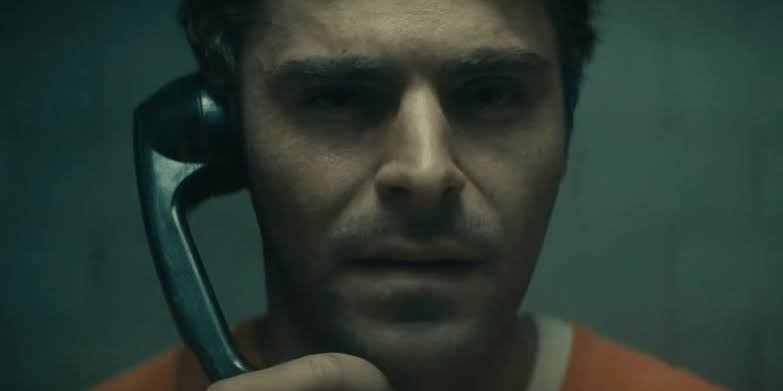
Commercial success has not protected the Ed Gein Netflix series from criticism. Some reviewers argued that the programme spends too much time recreating disturbing material while offering too little attention to victims. The Guardian awarded the series one star and criticized what it regarded as an exploitative fascination with violence and depravity rather than a meaningful examination of their consequences.
That criticism reflects a much wider debate around dramatized true crime. Producers must attract audiences while telling stories involving real victims and surviving families. The more heavily a production fictionalizes events, the harder it becomes for casual viewers to distinguish archival fact from screenwriting. That is particularly relevant to Monster, where invented encounters and speculative psychological explanations are interwoven with genuine names, dates and crimes.
The tension is unlikely to disappear. True-crime programmes regularly become major streaming hits because they combine mystery, history, psychology and courtroom drama. Yet audiences are increasingly scrutinizing whether a series gives victims enough narrative space, whether invented scenes are clearly understood as fiction, and whether repeated dramatizations risk turning perpetrators into entertainment icons.
What Viewers Should Know Before Watching
Anyone approaching the series primarily to learn about the case should treat it as a starting point rather than a final authority. The most useful approach is to distinguish three layers: confirmed historical facts, reasonable dramatic interpretation and outright fictional invention. For example, Bernice Worden and Mary Hogan were real victims; Gein’s grave robbing is extensively documented; his influence on horror characters is historically recognized. By contrast, claims involving his participation in the Bundy investigation are unsupported.
It is also worth remembering that the show carries a TV-MA rating and deals with disturbing themes. Viewers interested primarily in the filmmaking may find the performances, makeup, cinematography and period production especially notable—the same areas reflected in its 2026 Emmy nominations. Those looking for criminal history should supplement the programme with historical archives, reputable biographies and contemporary reporting rather than assuming dramatized dialogue represents recorded evidence.
This distinction makes the Ed Gein Netflix phenomenon especially interesting from a media-literacy perspective. Streaming drama can bring forgotten history to millions of people, but widespread visibility does not make dramatization equivalent to documentation.
What Comes Next for Netflix’s Monster Franchise?
Netflix is already moving beyond Gein. The fourth installment, centred on Lizzie Borden, is scheduled for September 17, 2026. The announced cast includes Ella Beatty as Borden, while Billie Lourd plays her sister Emma. Netflix has also confirmed appearances connected with other notorious historical figures as the anthology continues experimenting with the boundaries between crime history and cultural mythology.
The strategy suggests that Netflix sees Monster as a continuing prestige franchise. Each season offers a recognizable formula—famous crimes, prominent actors, intensive period production and built-in public curiosity—while generating new debates about accuracy and ethics. Given the audience numbers and awards attention produced by the Gein season, there is little evidence that public appetite for this type of television is disappearing.
Future true-crime dramas may face more pressure to distinguish documented events from invented ones. Viewers increasingly fact-check shows while watching them, and search engines fill with questions such as “Did this really happen?” within hours of a release. That behaviour could ultimately push streamers toward companion documentaries, historical notes or clearer explanations of creative liberties.
Conclusion
Monster: The Ed Gein Story succeeded because it connected several powerful strands of popular culture: true crime, prestige television, Hollywood history and the origins of iconic horror villains. Nearly a year after its release, its seven 2026 Emmy nominations have ensured that the conversation continues, even as Netflix prepares to move the Monster anthology toward Lizzie Borden.
For viewers, the most useful way to approach Ed Gein Netflix is with curiosity and caution. Watch the drama for its performances and interpretation, but check the historical record before treating its most sensational scenes as fact. The real story is already disturbing enough—and understanding where history ends and dramatization begins makes the series more revealing, not less. Continue exploring the documented case, the films it influenced and Netflix’s evolving Monster franchise to see how one crime story became part of a much larger cultural history.
Frequently Asked Questions
When did Ed Gein Netflix come out?
It premiered on October 3, 2025.
How many episodes are in Monster: The Ed Gein Story?
There are eight episodes.
Who plays Ed Gein on Netflix?
Charlie Hunnam plays Ed Gein.
Is the Netflix Ed Gein series a true story?
It is based on real events but contains substantial dramatization.
Did Ed Gein really help catch Ted Bundy?
No reliable evidence shows that he did.
How many Emmy nominations did the series receive?
It received seven nominations for the 2026 Emmys.
Who plays Augusta Gein?
Laurie Metcalf portrays Ed Gein’s mother.
You May Also Read: WatchFlix